
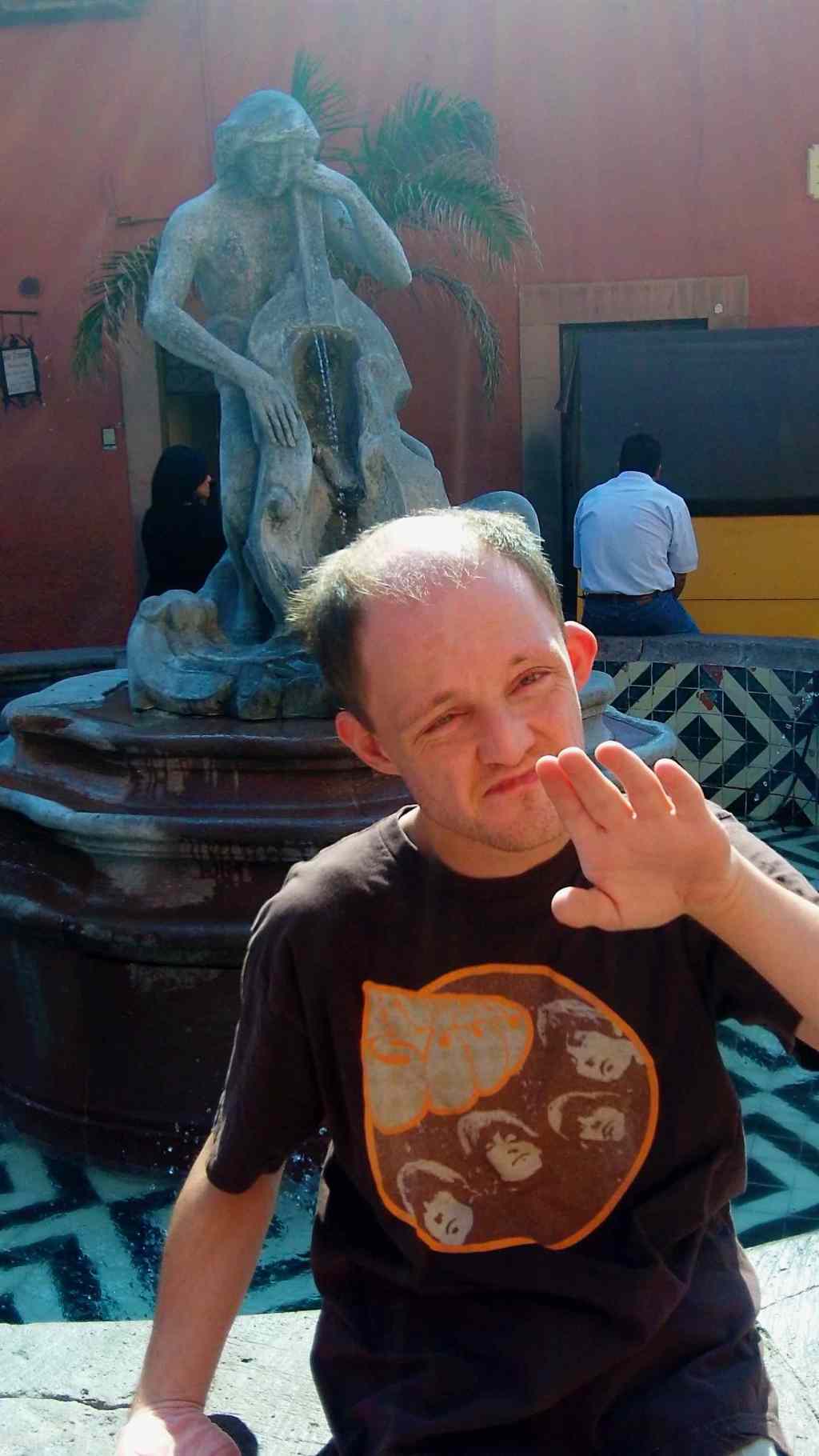
Advocacy is inescapable. We are always advocates, merely by living our lives in public, opening eyes and minds through our presence. In some ways, however, I become more aware of this social role when I travel outside my usual environs. I am unfamiliar to people in new places, just as they are unfamiliar to me. And nearly every time I travel, things happen that amplify what advocacy is and the connections it makes.
Many of us have traveled to advocacy destinations—such as spellers, autism, and disability conferences, sometimes with a group of cohorts, where our presence is magnified. What airport security learns in the fluster of assisting one person on the spectrum through a checkpoint is immediately reinforced or adapted as the next uncooperative body reacts to being asked to pass through a portal without touching the sides, or stand still and spread arms and legs to be searched. Our movements and noises make unwitting anthropologists of the people around us, as they observe in us a group demonstrating atypical neurology without raising the question of “bad behavior” that we may be suspected of as individuals. Restaurant workers speaking in loud, high, infantilizing voices often back down from and rethink their initial preconceptions more quickly when serving a tableful of adults and the people supporting them than they do when the disabled person is the sole minority.
But what happens when we are lone ambassadors? As with the pioneering we all do, it is largely improvised. Unless I am overwhelmed and in automaton mode, I prefer to take the lead (otherwise, I let my stepmom or staff know they can step in and provide people with directions or explanations). On a recent visit to the Midwest, I took my iPad to practice slowing myself down as I used the ProLoQuo app, which I found was easier to do with strangers than in the excitement of being with family. The encounter that made me happiest was when, at a relatively quiet Detroit airport restaurant, I ordered my meal to a server who had never encountered AAC. She was so thrilled by the back and forth of our conversation, which (though short and sweet) went beyond the menu. It was also more focused on us since my synthesized voice spoke for me, rather than my stepmom reading aloud my letter board communications. Lots of eye contact from her! (I’ve also found that strangers react more directly to me when I print my words on a Boogie Board.)
At two of my brothers’ weddings, ditching my stepmom and supported by a great staff person (but with minimal communication), as a member of the wedding parties I went to a casino and even a strip club—the only noticeably disabled person in both places, but staking ground for celebrants of every ability to go a little wild. At one of the receptions my stepmom assisted me in leading karaoke with my idiosyncratic sign language for the chorus of the Beatles’ “She Loves You”; most of the people had never met me before but jumped into “singing” the song, on my terms, with their hands. Yeah, yeah, yeah!
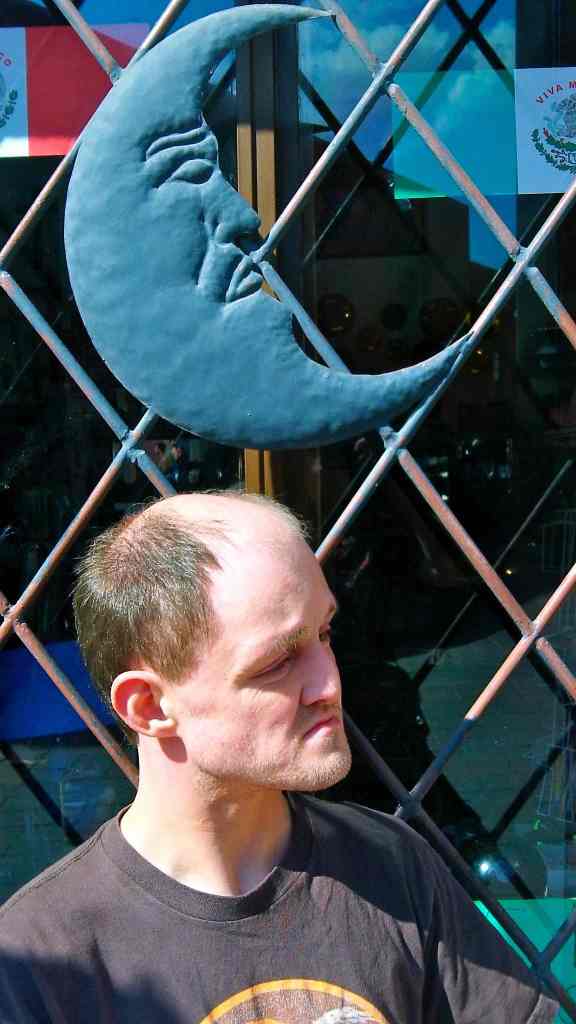
There was also the unexpected delight of a trip where advocacy met me on arrival. It was for another wedding (my uncle’s), in Querétaro, Mexico, in 2012. My stepmom and I went a few days early to stay at a bed and breakfast hosted by a wonderful former chef from Canada, and we arrived in time to join the luncheon she prepared monthly for her friends. At the table I shared a corner with a lively woman, Maria Buchmelter, whose napkin I kept stealing, and who was as cheeky as I was in conversational wit and flirtation. It turned out that, in her life before retiring to Querétaro, she had been a disability rights lawyer and had been involved in writing the Americans with Disabilities Act. This friendship was like a connection of souls. We got together with her and her husband, Bob Hall (a bioethics professor), at their home and would have spent more time together, but I became ill and had to recover before wedding activities, so I didn’t see her again. However, we kept in touch in the little over a year before she died of cancer (I had met her in remission). She invited my input about one of her sons (who is on the spectrum, with irregular communication), and proudly told me about him and her daughter, who founded Beyond Our Boundaries, a disability recreation service in Ohio. Maria brought me intense joy as a friend, and I was so pleased to thank her for her part in laying legislative foundations of the civil rights for which we both have been advocates.
Maria Buchmelter’s obituary (which tells you much about her, except for the fact that she was a dead ringer for Linda Ronstadt in the 1970s):
Herald-Star (Steubenville, Ohio), February 2, 2014
Editor’s note: This piece by my co-editor Nick is such a joy to read! I love how he engagingly shares truths about how we are perceived in the world and how our lived public experiences do serve as advocacy, but also part of our right to a fulfilling and fun life. – Danny

 Leo in Bloom Magazine
Leave a comment