
Editor’s note: Mark Reeves was the second president of the Lonesome Doves, a group of nonspeakers that included present and past Leo in Bloom contributors Chandima Rajapatirana and Matthew Leonard. I joined the group in 2000. Even then, Mark was a humorous, wise, patient, and dedicated disability advocate. We are pleased to reprint the text of a YouTube presentation he made in 2024 for The Arc Susquehanna Valley, Pennsylvania, where as a staff member he is AT/AAC Communications Liaison, as well as a Self-Advocate Leader in their DREAM program.
— Nick
IN MY OWN WORDS
Finding My Way
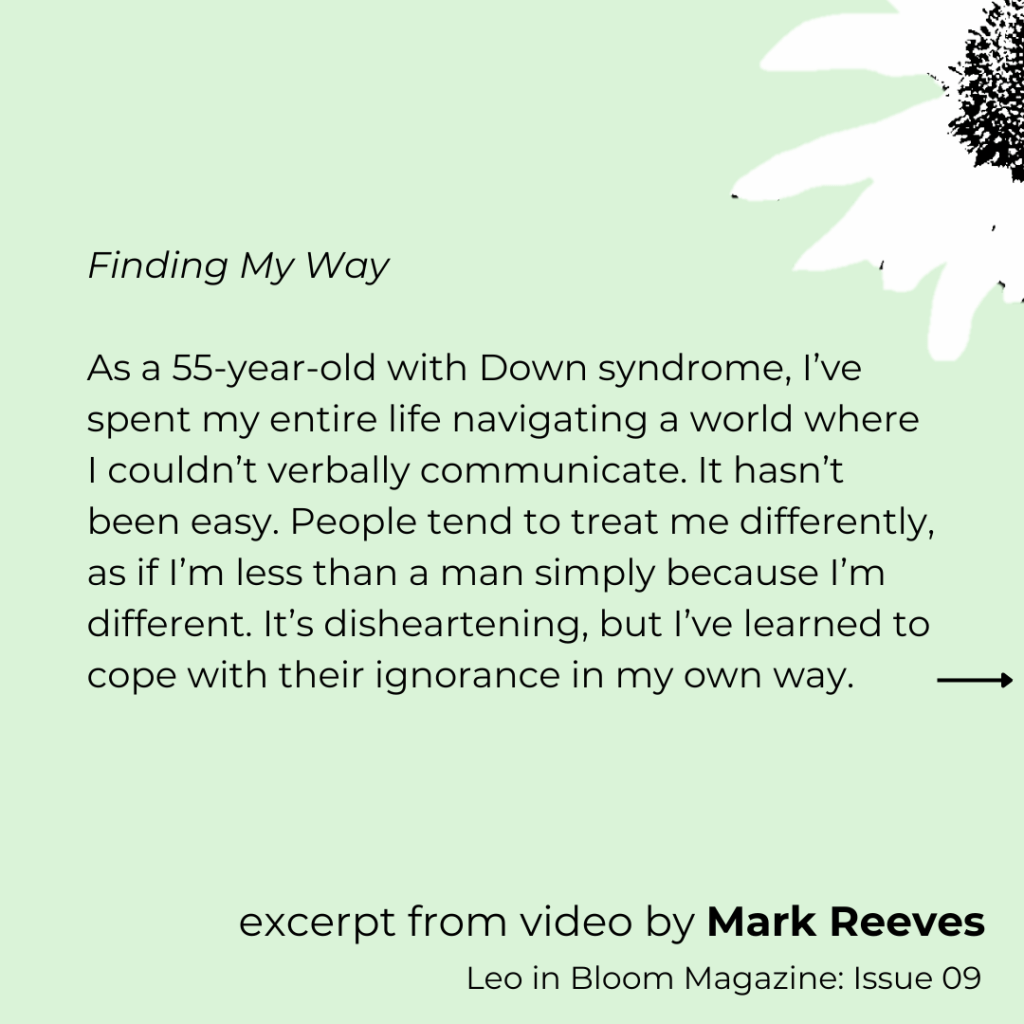
As a 55-year-old with Down syndrome, I’ve spent my entire life navigating a world where I couldn’t verbally communicate. It hasn’t been easy. People tend to treat me differently, as if I’m less than a man simply because I’m different. It’s disheartening, but I’ve learned to cope with their ignorance in my own way.
Feeling Voiceless
Growing up, I quickly realized that my silence seemed to make others uncomfortable. I could see the confusion and unease in their eyes as they struggled to understand me. Some would even avoid me altogether, as if my lack of words made me invisible or unworthy of their attention. It hurt, knowing that my voiceless state made me an outcast in their eyes.
I’m More than Words . . .
Speak with the Language of Heart
But I refuse to let their limited understanding define me. I am not defined by the words I cannot speak; I am defined by the thoughts and emotions that run deep within me. I’ve learned to communicate in other ways, through gestures, expressions, and the language of the heart. I’ve discovered that true connection lies beyond mere words.
Having to conquer fears
Bullying has been a constant presence in my life. People who don’t understand tend to fear what they don’t know, and their fear often manifests as cruelty. I’ve faced ridicule, taunts, and even physical aggression. It’s a harsh reality, but I’ve come to accept that it’s a reflection of their own limitations, not mine.
Compassion should be the foundation
I don’t harbor anger or resentment towards those who treat me poorly. I pity them, for their inability to see the beauty in diversity and their refusal to embrace understanding. I believe that empathy and compassion should be the foundations of our interactions with one another, but I understand that not everyone shares this perspective.
My purpose is to bring understanding
My purpose in life, in spite of the challenges I face, is to bring understanding. I am here to show others that being different doesn’t diminish my worth as a human being. I may not have the ability to speak, but I have a voice that speaks through actions, through kindness, and through the bonds I form with those who are willing to look beyond my silence.
The power of acceptance and love
I am a living testament to the power of acceptance and love. My existence is a reminder that we should embrace and celebrate our differences, rather than shying away from them. We cannot force others to have understanding, but we can lead by example and hope that our actions inspire change.
I am worthy of respect and dignity
And so, I navigate this world with grace and resilience, never letting the ignorance of others dampen my spirit. I am a man, worthy of respect and dignity, regardless of whether or not I can utter a single word. My purpose, my cool purpose, is to bring understanding to a world that often forgets its own importance.
The Arc Susquehanna Valley, YouTube post January 10, 2024
ABOUT MARK C. REEVES
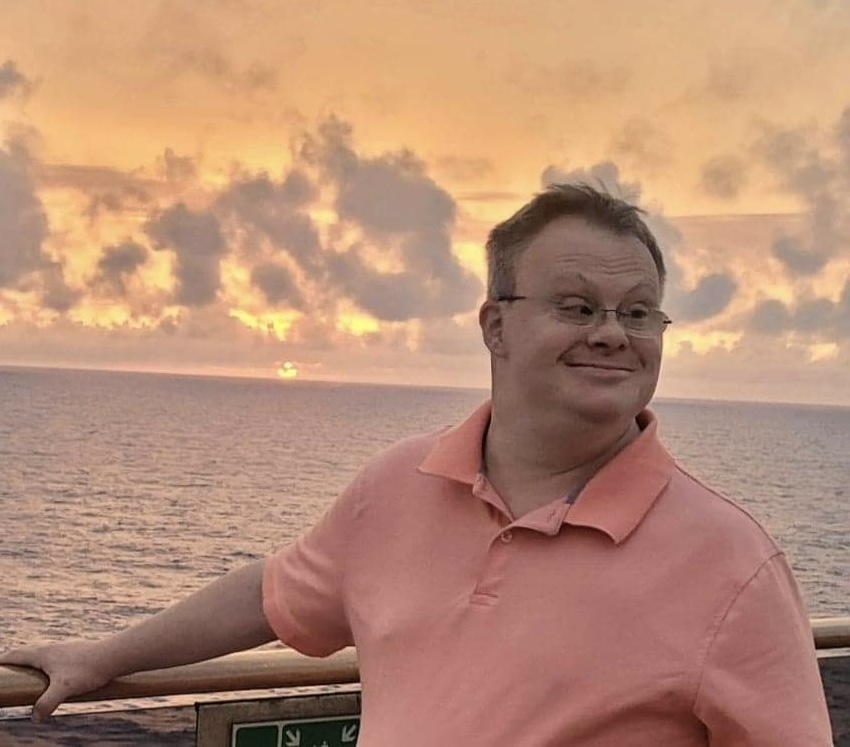
Besides his professional positions at The Arc Susquehanna Valley, Mark has led a communication social group, Snack and Chat, and worked for Networks for Training and Development in Philadelphia. He has been a speaker at universities (including Arcadia University in Philadelphia and Susquehanna University) and corporations (e.g., SUNCOM Industries in Northumberland, PA), and has made numerous presentations at disability conferences (such as TASH, Everyday Lives, and “Crossing dis/Ability Borders” at Syracuse University).
“Let who you are and what you believe shine through every sentence”: Mark is a nonspeaker, and although he was offered minimal communication with sign language and language boards in school, it was not until he was an adult that he was introduced to AAC at age 25. In the decades since then he has passionately championed communication rights, education, access, and self-determination choices.
 Leo in Bloom Magazine
Leave a comment